Why Document Control Failures Are Costing UK Construction Projects Time and Money
November 24, 2026
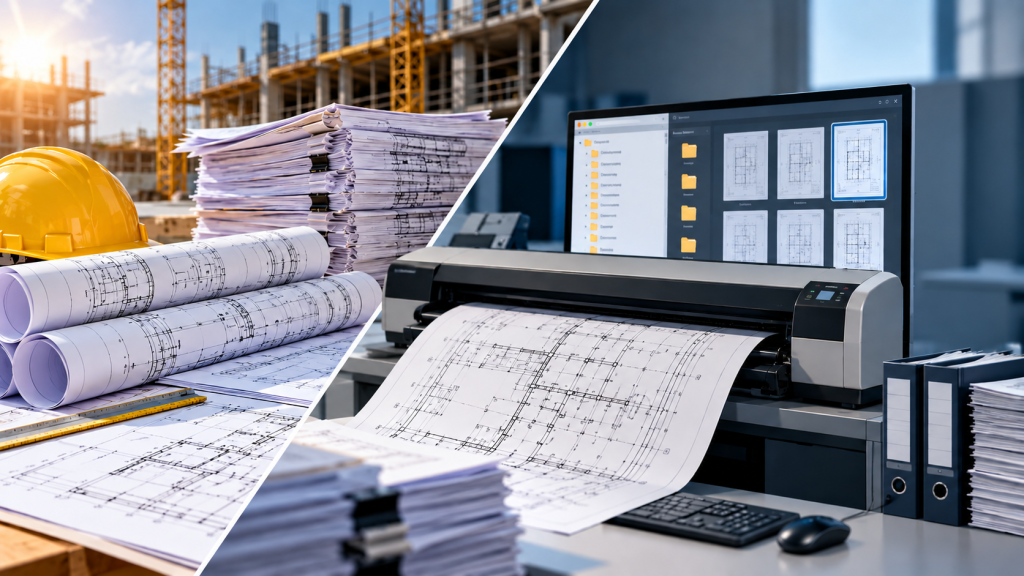
Have you ever had a site foreman ring you, frustrated, because they’ve just found out they’ve been building off Revision B for the past 4 days – while the architect uploaded Revision C almost a week ago? If you have managed a UK construction project for any length of time, you will know this scenario doesn’t feel rare.
When you’re looking for where the money’s leaking on a project, you probably check plant hire costs, labour rates, or material price rises first. Few project managers think to check the document register. Yet that’s often exactly where the value quietly disappears.
UK construction productivity currently sits 21% below the national average (Qureshi , 2025), and several factors create this gap, but poor document control is one area construction firms should highlight particularly. When your team is working from outdated information, the project doesn’t just slow down – it fractures. Miscommunication compounds, decisions get made based on the wrong data, and weeks later you’re staring at a dispute or a variation you didn’t see coming.
This is why construction document management shouldn’t sit at the bottom of your priority list.
Document Control Failures Cost for UK Construction Projects
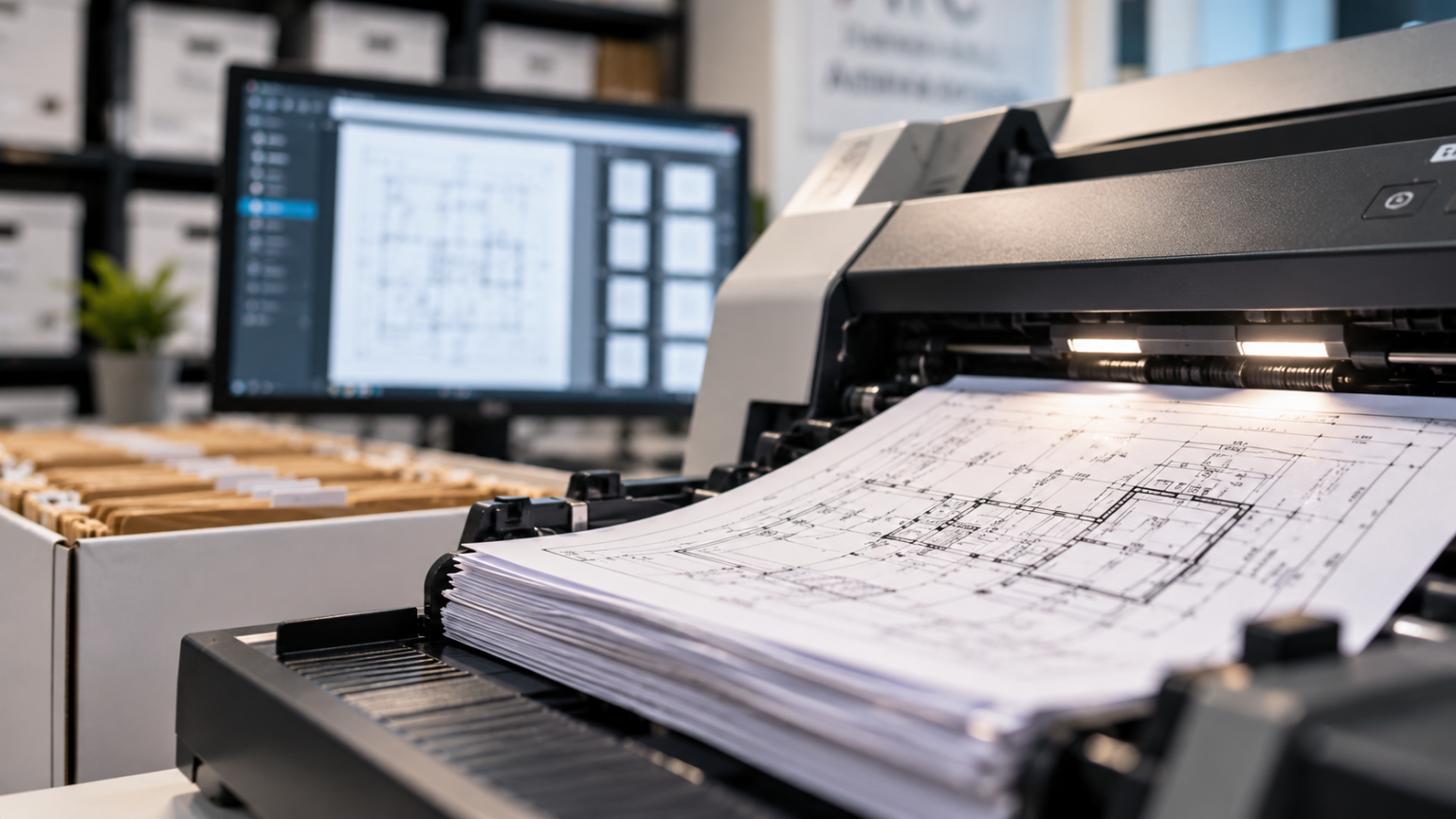
Think about the last time your team had to rip out and redo work because they’d built to the wrong specification. Was it caused by a missing drawing, or one that simply hadn’t been updated? You are not alone if the answer is yes, rework driven by poor construction and document control is one of the most common, and preventable, costs on a UK site.
What Are the Financial Consequences of Rework?
According to a 2025 report, field rework can average around 0.76% of a project’s total contract value once post-completion corrections are included. If you are running a £50 million scheme, that’s roughly £380,000 spent correcting mistakes that shouldn’t have happened in the first place. That figure isn’t abstract to you – it’s labour hours your team could have spent progressing the programme, materials you have paid for twice, and specialist plant you’ve had to book back onto site for fixes that were entirely avoidable.
How Does Poor Version Control Impact Site Productivity?
Have you ever thought about how much time does your team spend each week just looking for the right drawing, the right spec, the right sign-off? Industry data puts the average at 5.5 hours per week for each person. Multiply that across your site team over the life of a major build, and you are looking at the hundreds of hours that never went into actually constructing anything.
You will recognise the knock-on effects – idle sub-contractors waiting on information, missed milestones you then have to explain upward, and variation disputes that started because someone, somewhere, worked from an outdated revision without realising it. If this situation is familiar to you, then it is time to choose the best document control systems before your next project.
Outdated Drawings Damaging Your Project Timelines
You may have faced that a design change gets agreed on-site in a five-minute conversation, but it never makes its way back into the central office system. Perhaps a printed drawing, left out in the weather, becomes too damaged to read clearly. On their own, these feel like small, forgivable slips. But if you have ever traced a costly error back to its source, you will know it’s generally one of these handover gaps that started it.
What Causes Drawing Revision Errors?
Manual, paper-based procedures make this almost inevitable, because there’s rarely one single source of truth – just whichever copy happens to be closest to hand on the day. This is exactly the gap that solid construction drawing revision control best practices are built to close.
How Do Disconnected Systems Create Contractor Coordination Gaps?
If your architect, your main contractor, and your sub-contractors are all working from separate systems, you already know how coordination gaps creep in. One party updates a drawing; nobody tells the next party down the chain, and they carry one working from an old print. On multi-party projects, this happens more often than most teams would like to admit.
Digital drawing management solutions for construction companies exist to close exactly this gap, giving everyone on your project access to the same live, version-controlled information- no matter where they’re working from.
The Building Safety Act Redefines Document Compliance
If you are working on a higher-risk building- generally 18 metres or seven storeys and above, or otherwise defined as higher-risk under the Act – you’ll already know the Building Safety Act has changed what’s expected of you. You’re now required to maintain a detailed, accurate, and continuously updated record covering design decisions, materials used, and any changes made during construction, all of which must be readily retrievable throughout the building’s life.
This isn’t something you can reconstruct after the fact from old emails and site notes. Regulators expect building safety act compliance to be demonstrable the moment it is requested.
What Are the Penalties for Breaking UK Building Regulations?
You will want to know what’s at stake if this goes wrong. Beyond the project delays caused by a failed inspection or a stalled Gateway approval, you could be facing significant fines- and in serious cases, individuals in breach of their duties can face criminal liability. If you’re managing higher-risk buildings, treating construction compliance as an afterthought simply isn’t a risk worth carrying.
Why Are Paper Records a Legal Liability for the Golden Thread?
If a regulator asked you to see your golden thread tomorrow, could you present it in an afternoon? The golden thread is the continuous digital record of a building’s design, construction, and any subsequent changes – sits at the heart of the Building Safety Act, and paper simply can’t support it. Physical records degrade, go missing, and can’t be searched instantly.
If you’re still relying on filing cabinets, golden thread document management for construction projects effectively means you’re starting from a position of risk, not readiness. Every poorly controlled paper record creates another potential gap when regulators need you to demonstrate what happened, when it happened and who approved it.
How Can You Maintain a Searchable Digital Audit Trail?
A robust golden thread depends on your records being digitised properly – not just scanned into a folder, but indexed with the metadata that actually makes them retrievable. It involves project reference, revision number, document type, and date. Professional document digitisation services are what turn your archive from a pile of unsorted PDFs into a genuine compliance asset you can search in seconds.
Where Do Manual Transmittal Processes Break Down?
If you’re managing document control largely by hand, you’ll know how easily a single missed transmittal can leave a sub-contractor working from the wrong information for days before anyone notices. Manual logging is slow and human error is almost built into the process – especially once a project scales up in complexity.
How Does Staff Overload Lead to Two-Tier Information Systems?
When your document controller construction team becomes overloaded, you’ll likely see informal workarounds start to appear – site staff keeping their own local copies just for your reference. Before that, you’ve got two parallel versions of the project record – the official system, and the unofficial one living on someone’s laptop. Reconciling the two later, especially during an audit or a dispute, becomes a project in itself.
How Can You Achieve Total Construction Audit Readiness?
If an auditor walked into your project tomorrow, could you hand over your drawing revision history, safety case documentation, and change records without a scramble? If any of these only exist in a drawer or on one person’s laptop, your audit readiness is already compromised. Proper construction records management means your documentation is centralised, current, and traceable at all times.
What Documents Are Most Crucial During a Compliance Audit?
For a construction compliance audit, having the right records readily available can make all the difference. These may include drawing revisions, design changes, site records, inspection and test documentation, approvals, certificates, safety documentation and project correspondence. Keeping these records organised and traceable means your team can demonstrate what happened, when it happened and which version of the information was relied upon.
How Can Structured Indexing Speed Up Document Retrieval?

You will get the benefit of structured indexing the first time you’re asked for a specific document on short notice. Files tagged consistently by project ID, revision, and document type can be found in seconds rather than hours. This approach to construction project documentation turns what could be a defensive into a simple search.
How Can ARC UK Construction Firms Improve Document Control?
If any part of this has sounded family, we are just one click away. ARC UK’s document scanning services convert your site diaries, historic drawing sets, and paper-based project files into properly indexed digital records – tagged with project ID, revision number, and document type so they map cleanly into your existing Common Data Environment.
If any part of this has sounded familiar, you’re not alone, and it’s exactly what ARC UK helps UK construction firms fix.
Document scanning services
We convert your site diaries, historic drawing sets, and paper-based project files into properly indexed digital records, tagged with project ID, revision number, and document type so they map cleanly into your existing Common Data Environment.
Large format scanning services for construction drawings
We capture high-accuracy detail from oversized plans and technical drawings that standard scanners simply can’t handle.
Searchable archives
Every file is processed with high-accuracy Optical Character Recognition (OCR), so your archive becomes fully searchable, not just digitally stored.
Direct platform integration
We work with platforms such as Procore, Asite, and Viewpoint, so your legacy paper records sit alongside your live project data instead of existing as a separate, disconnected archive.
Golden Thread readiness
If you’re working towards Building Safety Act compliance, this gives you the searchable, auditable golden thread regulators expect, without months of manual reorganisation on your part.
Whether you’re closing out a legacy archive, preparing for a compliance audit, or simply tired of your team working from the wrong revision, talk to ARC UK. We’ll help you turn document control from a liability into a genuine advantage on your next project.
How much can poor document control cost a construction project?
If you’re not managing documentation properly, field rework can average around 0.76% of your total contract value (Love, 2025). On a £50 million project, that’s approximately £380,000 lost to corrections you could have avoided, before you factor in programme delays and disputes.
What is the Golden Thread in construction?
The Golden Thread is the continuous, accurate digital record of information about a building- covering design, construction, and any subsequent changes- required under the Building Safety Act, particularly if you’re working on higher-risk buildings. It needs to stay accessible and up to date throughout the building’s lifecycle.
How can document digitisation improve compliance?
Digitisation replaces the fragile, hard-to-search paper records you might currently rely on with indexed digital files tagged by project ID, revision, and document type. This gives you a searchable, auditable trail that satisfies Building Safety Act requirements and holds up under scrutiny during inspections or audits.
What are the best practices for construction drawing revision control?
You should maintain a single, centralised source of truth for all drawings, make sure on-site changes are logged back into your central system immediately, use consistent version tagging, and digitise physical drawings so they can’t degrade or get lost.
Why is a document controller vital in construction?
A document controller keeps everyone on your project working from the same, current information. Without dedicated oversight, manual transmittal processes break down, informal “shadow” record-keeping creeps in, and your risk of costly rework or compliance failure goes up significantly.
What Are Your Printing Requirements?
Latest stories
Large Format Scanning for Architects and Contractors: Managing Drawings Without the Chaos
Lost, outdated or inaccessible drawings are among the biggest contributors to costly rework on construction projects. Recent research suggests that field rework can account for an average of 0.76% of a project’s total contract value when post-completion corrections are included. On a £50 million project, that’s potentially £380,000 lost – a substantial price to pay […]
Read More about Large Format Scanning for Architects and Contractors: Managing Drawings Without the ChaosWhy Businesses Are Using Wall Graphics to Strengthen Brand Recognition
Most workspaces have at least one blank wall that looks complete but conveys nothing. It is painted and structurally sound. It says absolutely nothing about your business or brand. A black wall is definitely a missed opportunity. Every wall has the potential to communicate something about your brand before a conversation even begins. Physical environments […]
Read More about Why Businesses Are Using Wall Graphics to Strengthen Brand RecognitionTemporary Event Graphics vs Permanent Signage: Which Is Right for Your Business?
Have you ever wondered why some stores get maximum footfall, whereas others get zero? Poor signage graphics can be one of the reasons for getting a low impression. Surprisingly, it just takes seven seconds to form the first impression of any business or brand. Whether you run a shopping centre, retail business or launch brands, […]
Read More about Temporary Event Graphics vs Permanent Signage: Which Is Right for Your Business?Request a Quote
Please note: This form is for sales enquiries only. For job applications and all other general enquiries, please email info@e-arc.co.uk. We are unable to respond to non-sales enquiries submitted via this form.
Apply Now