Sustainable Print & Engineered Set Solutions for UK Theatre & Performing Arts
March 13, 2026
Key Takeaways
- Theatre graphics UK play a key role in visual storytelling.
- Large format printing for theatre ensures clarity and scale on stage.
- Sustainable materials reduce cost, waste, and transport challenges.
- Integrated production services improve consistency across venues.
- Theatre signage solutions enhance audience experience and navigation.
- Professional installation ensures timely and accurate execution.
- Modern theatre production relies on creativity and operational precision.
Why Do Theatre Productions Need Integrated Print Solutions?
UK theatre productions today are more complex than ever. From immersive stage design to audience navigation, every detail matters.
We support the UK’s Theatre and Performing Arts industry with a complete visual production service; combining stage graphics, large format printing, venue branding, and audience-facing displays to create a seamless and immersive experience from first impression to final curtain.
Alongside striking backdrops and promotional materials, our state-of-the-art cardboard engineering delivers reusable and recyclable set solutions that reduce costs, improve sustainability, and maintain the highest creative standards without compromising visual impact.
In simple terms, production teams should work with a reliable printing partner who can manage theatre set printing, signage, installation, and logistics under one roof. This ensures quality, speed, and consistency across the entire production.
What Are Theatre Graphics and Production Printing Services?
Theatre production printing services include a complete process starting from the design, print, and installation of all visual elements used in a performance environment.
This covers everything from stage backdrop printing, theatre signage solutions to performance venue graphics.
These services typically include:
- Scenic graphics printing for stage sets
- Theatre display graphics for front of house areas
- Wall graphics for theatres across venues
- Backstage signage solutions for operational clarity
This means production teams can manage all visual elements through one coordinated process.
Why Do Modern Productions Rely on Large Format Printing?
Theatre is all about visual storytelling. Every set, backdrop, and surface contributes to the audience experience.
Large format printing for theatre allows designers to create bold, immersive visuals that are visible from every seat.
It supports:
- High resolution stage backdrop printing
- Detailed scenic graphics printing
- Flexible fabric printing for stage design
- Large scale theatre display graphics
The main reason is clarity and scale. Our large format printing ensures visuals remain sharp,and eye catchy across wide stage areas.
Can One Partner Manage Multi Venue Theatre Production Needs?
Touring productions and festivals often operate across multiple locations. Managing consistency across multiple becomes a challenge.
A reliable partner offering theatre graphics UK with nationwide rollout capability ensures that every venue delivers the same experience.
This includes:
- Coordinated venue graphics installation UK
- Centralised project management
- Consistent theatre branding and signage
- Timely delivery across multiple locations
This approach reduces risk and simplifies complex production schedules.
How Sustainable Materials Are Changing Theatre Set Design
Sustainability is a key focus across the UK performing arts sector.
Many productions are moving towards eco friendly scenic design solutions for theatres and sustainable materials for theatre set design.
Why Sustainability Matters in Theatre Production
Productions often involve temporary sets and materials. Without planning, this can lead to high waste.
Using sustainable event and performance graphics UK helps reduce environmental impact while maintaining an elegant visual quality.
Materials That Support Sustainable Production
Modern solutions include:
- Recyclable substrates
- PVC free print materials
- Modular cardboard stage sets UK
- Reusable lightweight touring theatre set materials UK
These materials reduce waste and make transport easier.
Practical Benefits for Production Teams
Sustainable materials improve business operations:
- Lighter materials reduce transport costs
- Modular systems allow reuse across productions
- Faster installation improves efficiency
This means sustainability supports both environmental and commercial goals.
What Role Do Signage and Wayfinding Play in Venues?
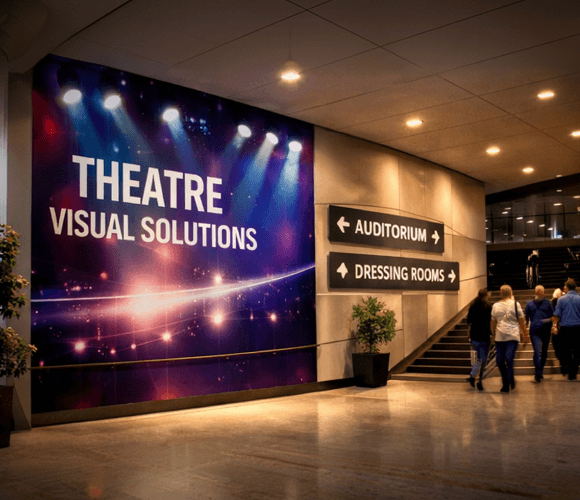
Audience experience does not start at the stage. It begins the moment someone enters the venue.
Theatre signage solutions and theatre wayfinding signage help visitors navigate spaces conveniently.
Key Applications in Theatre Environments
- Entrance and directional signage
- Seating and section identification
- Backstage operational signage
- Branding across foyers and corridors
Clear event and performance graphics UK improve safety as well as visitor experience.
How Installation and Rollout Impact Performance Timelines
Even the best designs can fail without proper installation.
Custom stage graphics printing and installation UK ensures that visuals are delivered and installed on time.
What a Complete Installation Process Includes
At ARC UK, we provide a complete installation service including –
- Site survey and measurement
- Production planning
- Logistics coordination
- Professional installation
- Post event removal or reuse
This structured approach ensures consistency across all venues.
Enabling Creative Freedom for Theatre Teams
When production logistics are simplified, creative teams gain more flexibility.
Reliable theatre production printing services allow designers to focus on storytelling instead of operational challenges.
This means:
- Faster turnaround time
- Greater design flexibility
- Reduced production risk
Creative teams can explore bold ideas with confidence.
Reliability in High Pressure Theatre Environments
Theatre productions often operate under strict deadlines.
Delays in stage graphics printing or installation can affect rehearsals and live performances.
Working with an experienced partner ensures:
- Consistent quality
- Accurate timelines
- Coordinated delivery
This level of reliability is critical for successful productions.
Supporting a Wide Range of Theatre Applications
Modern theatre graphics UK solutions are used across different types of productions.
These include:
- Touring theatre productions
- Immersive performance experiences
- Festivals and temporary installations
- Educational theatre projects
- Corporate and branded events
This flexibility makes integrated production support essential.
The Big Three Types of Stage Backdrops Used in UK Theatre
Knowing the main types of backdrops will help you talk to designers and suppliers more clearly. Most productions depend on one of these three groups.
Drapes and masking cloths for the stage
Theatrical drapes frame the stage and hide technical areas. They are common in theaters, conference centers, and touring shows. Black wool serge is a common material for professional masking.
Velvet curtains for high-end theater settings
Heavy fabrics for stage curtains that absorb light. These fabrics are made to soak up light instead of bouncing it back. This keeps the focus on the performers and stops glare from happening.
Backdrops with paintings and scenery
Scenic backgrounds tell the story through pictures. They often have pictures of landscapes, rooms, or stylised illustrations.
Many modern shows use stage backdrop printing services in the UK to make detailed scenic designs, but traditional theater companies still use hand-painted cloths.
People often use it for:
- Scenes from a pantomime in the forest
- Backdrops of old towns
- Landscapes from fantasy
- Stage settings with brand names for events
Printed scenic cloths let productions get detailed visuals without having to build big stage sets.
Technical Fabric Backdrops for Lighting Effects
Some stage fabrics are designed specifically to interact with light.
Examples include:
- Gauze or sharkstooth scrim for reveal effects
- Cyclorama cloth for colour wash lighting
- Translucent fabric for projection
These technical fabrics allow lighting designers to create depth and visual transitions during the show.
Case Study: Sustainable Scenic Graphics for Touring Production
A UK touring theatre company adopted lightweight touring theatre set materials UK and scenic graphics printing for a national production.
The approach included:
- Modular cardboard set structures
- Reusable fabric printing for stage backdrops UK
- Centralised theatre production printing services
Results
- 25 percent reduction in transport costs
- Faster installation across multiple venues
- Reduced material waste
Source: Arts Council England sustainability guidelines and touring production reports.
This example shows how combining sustainability with production planning delivers measurable results.
Conclusion
Theatre production is a balance between creativity and execution.
With the right approach to theatre graphics UK, production teams can deliver visually powerful and operationally efficient performances. From stage backdrop printing to sustainable set design, every element contributes to the final experience.
As the UK performing arts sector continues to evolve, the demand for integrated, reliable, and sustainable solutions will significantly increase over time.
Theatre Graphics UK and Production Printing
What are theatre graphics UK services?
Theatre graphics UK services include design, printing, and installation of stage visuals, signage, and environmental graphics used in theatre productions.
What is stage graphics printing used for?
Stage graphics printing is used to create backdrops, scenic visuals, and set elements that support storytelling during performances.
Why is large format printing important in theatre?
Large format printing for theatre ensures visuals remain clear and impactful across large stage areas and audience viewing distances.
Are sustainable theatre materials reliable?
Yes. Modern sustainable materials for theatre set design are designed to be durable, lightweight, and reusable, making them suitable for both static and touring productions.
What is scenic graphics printing?
Scenic graphics printing involves producing visual elements that replicate environments such as landscapes, interiors, or textures used in stage design.
How far in advance should theatre graphics be planned?
Most productions plan stage backdrop printing and graphics at least 4 to 6 weeks in advance to allow for design, production, and installation.
Can one supplier manage printing and installation?
Yes. Many providers offer theatre production printing services that include design, print, and installation as a complete solution.
What materials are used for stage backdrops?
Common materials include fabric, vinyl, and soft signage theatre solutions, depending on the design and lighting requirements.
How do theatre signage solutions improve audience experience?
Clear theatre signage solutions help visitors navigate venues easily, improving flow, safety, and overall satisfaction.
What Are Your Printing Requirements?
Latest stories
Temporary Event Graphics vs Permanent Signage: Which Is Right for Your Business?
Have you ever wondered why some stores get maximum footfall, whereas others get zero? Poor signage graphics can be one of the reasons for getting a low impression. Surprisingly, it just takes seven seconds to form the first impression of any business or brand. Whether you run a shopping centre, retail business or launch brands, […]
Read More about Temporary Event Graphics vs Permanent Signage: Which Is Right for Your Business?The Complete Guide to Christmas Window Graphics for UK Retailers
Key Takeaways Christmas shop window displays are the first step in your customer journey, not just decoration. The right vinyl window graphics increase footfall and strengthen festive branding. Competent artwork, standard printing, and installation give you real footfall and protect your investment in retail branding. Quick Answer: Christmas window graphics create the first impression for […]
Read More about The Complete Guide to Christmas Window Graphics for UK RetailersChristmas Signage Ideas for Offices, Retailers and Hospitality Venues
Christmas time doesn’t just bring holiday spirit; it also brings higher expectations for businesses, including offices, retailers, and hotels. Consumers look for attractive storefronts, clients expect welcoming meeting rooms, and guests expect memorable experiences. Christmas is the time when you can actually drive your sales. If your business looks no different from the rest of […]
Read More about Christmas Signage Ideas for Offices, Retailers and Hospitality VenuesRequest a Quote
Apply Now